
RTTV Covers FBI Censorship of Sibel Edmonds

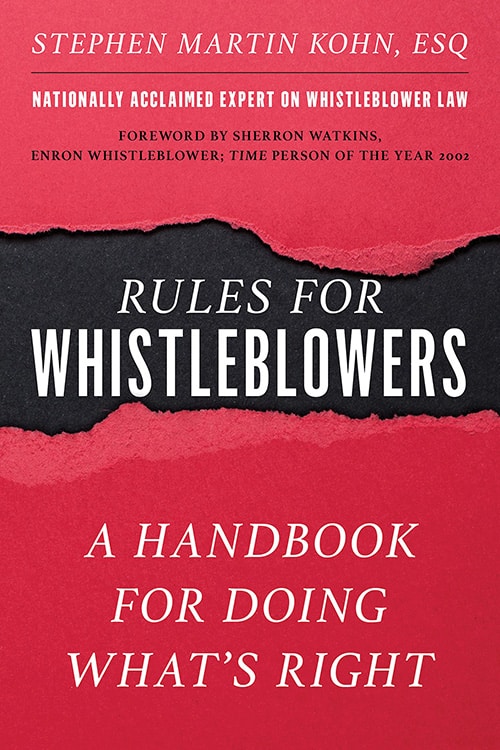
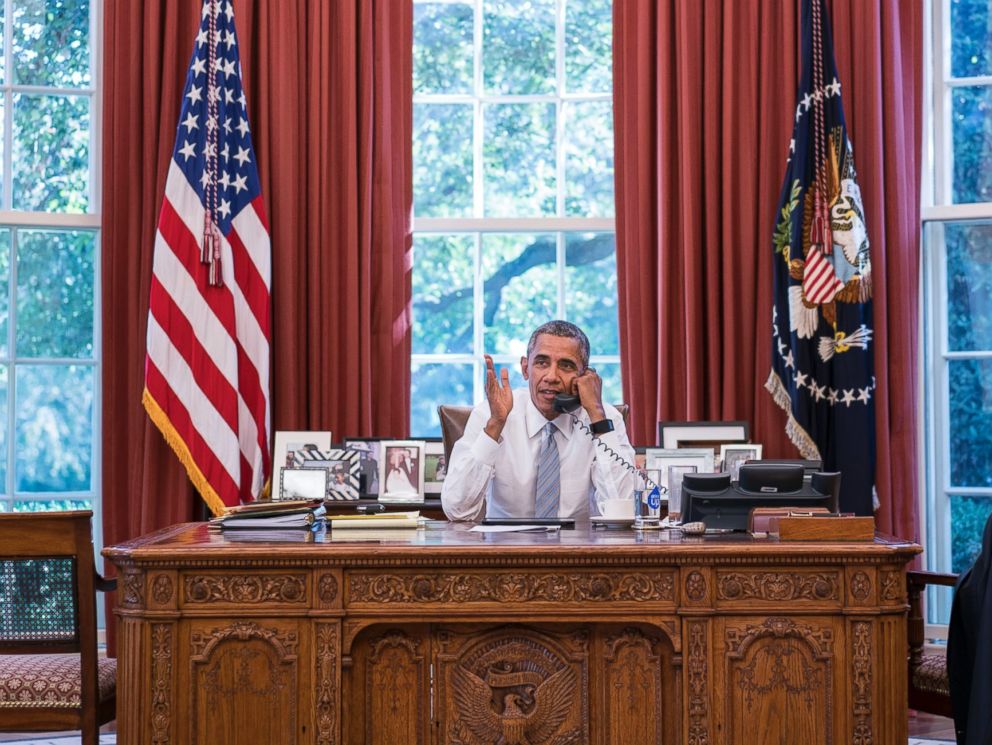
NWC Executive Director Stephen Kohn appeared live on RTTV last night to discuss the treatment of national security whistleblowers under the Obama administration. Specifically, RTTV asked him about the FBI's attempts to censor Sibel Edmonds as she attempts to publish a book about her experience blowing the whistle at the Washington Field Office.

How does Obama's record on whistleblowers compare to that of the founding fathers? The answer might not be what you think. Here's the full interview:

Congress Questions Federal E-mail Surveillance Policies

Yesterday, Senator Charles Grassley and Representative Darrell Issa released a letter asking the Obama Administration for assistance in assessing the e-mail monitoring policies of all federal agencies. This letter was sent in light of Congressional and Office of Special Counsel investigations into the Food and Drug Administration's (FDA) illegal targeting of whistleblowers for highly-intrusive monitoring.

The Congressional investigations raised the "broader question about the policies and practices for electronic surveillance at other federal agencies" and asked the Obama Administration's Office of Management and Budget to conduct a survey of every federal agency's policy.

These investigations were sparked by a lawsuit filed by six FDA whistleblowers and documents released by the National Whistleblowers Center that show the FDA intercepted personal communications to Congress, including emails to House Oversight and Government Reform Committee. 

You can Take Action by sending an email to the President, FDA officials, and members of Congress demanding that the six whistleblowers be protected and targeted surveillance be halted throughout the federal government.

Can anybody spell "witch hunt?"

The BBC is reporting today that the Obama administration is developing a "test" to detect whistleblowers. "Clearly there are different reasons why people leak information, the public spirited uncovering of wrong-doing being one of them," BBC reporter Olivia Lang writes. Based on documents obtained by Mike Isikoff of MSNBC, the new program will use sociologists and psychiatrists to discover potential leakers. Perhaps these experts will be so smart that they can find whistleblowers before the whistleblowers find wrongdoing to blow the whistle on. Call me old fashioned, but I would have thought that it would be a better use of money to find what is wrong with the government programs and fix that so no one will have to blow the whistle.

The report says that the program has already been used by the intelligence agencies, and now the administration wants to expand the program to other federal departments. The program will also use polygraph examinations and look for foreign travel and contacts. Another indicator of risk is if the employee is unhappy. Perhaps the polygraph exam will cheer them up.

How accurate can such a test be? Is it good enough to use in court to prove that a whistleblower really is a whistleblower? "[N]othing is foolproof, and there is a lot of wishful thinking being portrayed as science," says Shari Pfleeger, director of research at the Institute for Information Infrastructure Protection at Dartmouth College.

Proponents of the "insider threat program" will look for "concerning behavior." This is a concern itself. What would such a program think of an employee who believes that agency managers engaged in illegal race or gender discrimination? How would the program distinguish between a civil rights advocate and a threat to national security?  Smart employees will learn to keep their eyes focused on the floor in front of them, and their mouths shut. "If employees are coerced and intimidated into remaining silent when they should speak out, the result can be catastrophic."  Rose v. Secretary of Department of Labor (6th Cir. 1986), 800 F.2d 563, 565 (J. Edwards concurring). That is the real cost of a witch hunt, and the cost is too high.

See also, John Nichols blog post on The Nation.

MSPB reports on the federal whistleblower predicament

This week, the federal Merit System Protection Board (MSPB) released a report to President Obama. The report reviews hurdles federal employees have to jump before they can win a case of whistleblower retaliation. It is called Whistleblower Protections for Federal Employees. In the cover letter to President Obama dated September 2010, MSPB Chair Susan Tsui Grundmann states:

This report spells out in greater depth the difficulties a potential whistleblower may face when navigating the law to seek protection from agency retaliation. I hope you will find this report useful as you consider issues affecting the Government’s ability to protect employees who disclose fraud, waste, abuse, and other wrongdoing within the Federal Government.

An MSPB press release about the report lists some of the hurdles. (See the continuation of this blog entry for that list.) The MSPB report fails to mention other hurdles, particularly those of MSPB's own making. Another study found that MSPB, under the prior administration, ruled for federal employees in only 1.7% of cases. The MSPB's report cites the Federal Circuit case of Lachance v. White, 174 F.3d 1378, 1381 (Fed. Cir. 1999), cert. denied, 528 U.S. 1153, 120 (2000), but does not mention that this case required the whistleblower to have "irrefragable proof" of mismanagement to have any protection from retaliation.

Also missing from MSPB's report are a list of things that MSPB itself can do to improve the rights of federal employee whistleblowers. The MSPB can find that its past holdings have impeded whistleblowers from raising concerns about mismanagement, and urge the appellate courts to defer to its expertise under FCC v. Fox Television Stations, Inc., 556 U.S. ___, 129 S. Ct. 1800 (2009), and Chevron U.S.A., Inc. v. Natural Resources Defense Council, Inc., 467 U.S. 837 (1984). MSPB can hire Administrative Law Judges, and set standards for assuring that employees have adequate time and support to complete meaningful discovery. MSPB can simplify the process for whistleblowers and the Office of Special Counsel to seek stays of prohibited personnel practices and other forms of immediate relief.

Recognizing its role as an adjudicative body, MSBP declined to express any recommendations for changes in the law. Nowadays, it is hard to find anyone who would argue that there is no need to change the law. Unfortunately, the most prominent proposal for changing the Whistlebleblower Protection Act, S. 372, is itself flawed and would add additional hurdles for federal employee whistleblowers. I recently asked my colleagues in the National Employment Lawyers Association (NELA) if any of them would take contingent cases under S. 372 if it passed.  I have had no takers. No experienced lawyer has come forward to say that this law will make it viable to represent federal employee whistleblowers. We are a long way from assuring that federal employees who speak up for taxpayers get the customary legal protections required by international law.

Here is the MSPB's press release statement about the hurdles whistleblowers must clear:

To qualify as a whistleblower under the Whistleblower Protection Act, a Federal employee or applicant for employment must disclose: a violation of any law, rule, or regulation; gross mismanagement; a gross waste of funds; an abuse of authority; or a substantial and specific danger to public health or safety.
However, this disclosure alone is not enough to obtain protection under the law. The individual also must: avoid using normal channels if the disclosure is in the course of the employee’s duties; make the report to someone other than the wrongdoer; and suffer a personnel action, the agency’s failure to take a personnel action, or the threat to take or not take a personnel action. Lastly, the employee must seek redress through the proper channels before filing an appeal with the MSPB.
A potential whistleblower’s failure to meet even one of these criteria will deprive the MSPB of jurisdiction, meaning that by law, MSPB will be unable to provide any redress in the absence of a different (non-whistleblowing) appeal right.

Harper's reports on yet another whistleblower prosecution

Harper's Magazine is publishing a report by Scott Horton on yet another prosecution for releasing information. Called "Obama's War on Whistleblowers," the article focuses on the prosecution of Steven Kim, a scholar of North Korea’s nuclear program. Since Kim did consulting work for the State Department, the prosecution contends he should not have spoken to Fox News about how the North Koreans were likely to react to proposed sanctions. Former prosecutor and Johns Hopkins professor Ruth Wedgwood told Horton that the Fox News report “contains completely unremarkable observations about what a country would do if it was sanctioned for its poor behavior. These kinds of observations were well known to anyone paying attention to public sources and ought not be the basis for making someone a federal felon.” Assistant Attorney General David Kris says the charges are a “warning to anyone who is entrusted with sensitive national security information and would consider compromising it.” Those who are following the prosecutions of Thomas Drake and Bradley Manning, and the failure to grant clemency to Brad Birkenfeld, may see a pattern. Horton notes that Obama, as a lawyer, represented a whistleblower.  As a candidate, Obama pledged to “strengthen whistleblower laws to protect federal workers who expose waste, fraud, and abuse of authority in government.” Horton complains that the prosecution of Kim will effectively "censor public debate about vital facts relating to international affairs and possibly to war. *** [W]e’re supposed to be kept ignorant while the national-security state cares for us all."

Allegations of Retaliation Against Whistleblowers Surround U.S. Attorney Nominee

President Obama recently nominated Robert E. O’Neill to serve as U.S. attorney for Florida’s Middle District, one of the country’s busiest regions. The nomination will be reviewed by the Senate Judiciary Committee in the coming months and will need to be approved by a vote of the full Senate. However, there are questions regarding his nomination based on O’Neill’s alleged involvement with whistleblower retaliation.

Between 1999 and 2003, O’Neill was former federal prosecutor Jeffrey J. Del Fuoco’s supervisor. Del Fuoco was in charge of investigating a corrupt Manatee County, Florida sheriff, Charles B. “Charlie” Wells, and an elite group of his deputies known as the Delta Squad. Then Assistant U.S. Attorney O’Neill gave Del Fuoco a glowing review, stating he “was able to demonstrate the legitimacy of the investigation and the fact that the corruption was rampant.”


The street crime-fighting record of Sheriff Wells was praised, but there were a number of allegations over the years that he mixed public and private business. Sheriff Wells was an advisor to Florida governor Jeb Bush. When George W. Bush appointed a new U.S. attorney, Paul I. Perez, Wells met with Perez to express his “opinion that Mr. Del Fuoco needed to be closely supervised.” According to the St. Petersburg Times “given the history of investigation into the Sheriff’s Office, Perez’s visit put him in a position where it could have appeared he was being influenced by Wells, an expert on legal ethics says.”

In 2002, Del Fuoco was still working on the sheriff’s case, but was spending most of his time investigating corrupt police officers in another city. So, when he discovered a black vehicle watching his home he assumed that it was as a result of that case. However, it was quickly discovered that a Manatee sheriff’s employee had run Del Fuoco’s tag numbers through the Florida Crime Information Center (FCIC) computer in order to get his home address and other personal information. Del Fuoco, concerned for his family, repeated asked Perez for protection, but received nothing for those efforts.

Out of frustration that the DOJ had done nothing to protect his family, Del Fuoco filed a lawsuit against the Sheriff and some of his employees for illegally accessing law enforcement data to retaliate against him for prosecuting Delta Squad members. The lawsuit “ helped poison Del Fuoco’s relations with supervisors, who felt he had acted rashly.” Del Fuoco’s lawsuit also helped spur more allegations involving the Manatee Sheriff’s Office to be reported to the U.S. Attorney’s Office. However, in May 2003, Del Fuoco was transferred from the criminal to civil division, all contemporaneous with filing a lawful complaint of whistleblower retaliation with the U.S. Office of Special Counsel (OSC). Del Fuoco considered his demotion to be in retaliation for filing the lawsuit against the politically connected sheriff. In fact, shortly after Del Fuoco was removed from the investigation into Sheriff Wells the investigation of Wells was dropped and the investigators were told that since Wells “swings a big bat,” there “would be no further investigations targeting him.” Del Fuoco resigned his position at the DOJ in August 2005.

Please click here to read a letter dated April 26, 2004 from Attorney Stephen M. Kohn to former Attorney General John Ashcroft detailing the improper and illegal harassment suffered by Mr. Del Fuoco and his family.

The National Whistleblowers Center hopes that the Senate Judiciary Committee conducts a full investigation into whether or not nominee Robert E. O’Neill retaliated against whistleblower Jeffery J. Del Fuoco for having the guts to stand up to a corrupt, politically connected sheriff. If the committee concludes that O’Neill illegally retaliated against a whistleblower, then they should not approve of his nomination.

Related Articles:

“Robert O’Neill nominated for U.S. attorney” St. Petersburg Times, June 9, 2010

“Was Manatee sheriff a target of prosecution or persecution?” St. Petersburg Times, March 29, 2008

“Former Manatee County sheriff merits closer scrutiny” St. Petersburg Times, April 4, 2008

April 26, 2004 letter from Attorney Stephen M. Kohn to former Attorney General John Ashcroft

The Need for Whistleblowers in "Top Secret America"

This morning the Washington Post published the first of a three-part series on “Top Secret America.” The series is a culmination of a two-year investigation into America’s post 9/11 intelligence community. I, like most Americans, knew that the intelligence community was large, but I was still shocked to see the sheer numbers of agencies, employees, facilities, and money being spent. The article explains how this mammoth bureaucracy continues to grow even though most of its inefficiencies can be traced to being too large to manage – one agency does not know what other agencies are doing.

The most disturbing part is that there is little to no accountability for these agencies. One can argue that if it is human nature that if you think no one is watching you are going to take a cookie out of the jar, then pretty soon you are going to walk away with the whole jar and not even think twice about it. The employees who have the guts to stand up and object are quickly squashed with little to no recourse. The authors of the article even point out that most officials they spoke to requested anonymity because “they feared retaliation at work for describing their concerns.” These officials were not disclosing classified information, they were simply criticizing the management of their agencies.
(Cartoon Credit: 2002 Pittsburgh Post-Gazette)

The American people deserve to know that their money is being spent in a way that  will enhance national security and not trample on their civil liberties. As Glenn Greenwald accurately points out, there is a small group of individuals who are able to “shed a small amount of light on what actually takes place.” There is an even smaller group of employees who are willing to risk their careers to protect the American people. In order to create oversight and protections for national security employees, Congress must immediately pass the Whistleblower Protection Enhancement Act (H.R. 1507) and the President must sign it into law. H.R. 1507 would fully protect these employees so that they could safely raise issues without losing their jobs. There are procedures in place that would protect classified information from leaking out, but would allow employees to take their case to federal court for a fair trial. The Government Accountability Office has stated that it will not pose a risk to national security to give these employees court access.

The Senate has been pushing a bill (S. 372) that would grant some federal employees additional whistleblower rights, while stripping other employees, including FBI employees, of what little rights they have now. The bill creates a sham procedure where national security employees appear before a board of intelligence officials to prove that an intelligence agency has been retaliating against them. Any person with a bit of common sense will be able to predict what will happen to that employee. The outcome will not be pretty, especially when the agency is allowed to introduce secret evidence that the whistleblower is not allowed to see or counter.

To the disappointment of the whistleblower community, President Obama has run away from his campaign promise to protect whistleblowers and support H.R. 1507. It is up to the American people to demand what they were promised.  

Ellsberg ciriticizes Obama for prosecution of whistleblowers

Speigel Online is today releasing an interview with Daniel Ellsberg in which Ellsberg criticizes the Obama administration for increasing the use of criminal prosecutions against whistleblowers.  Ellsberg released the Pentagon Papers to reveal how numerous previous administrations had resorted to lying to the American people to conceal the real purposes of the Vietnam War. The Nixon Administration's prosecution of Ellsberg ended in dismissal after the infamous White House plumbers broke into the offices of Ellsberg's psychiatrist to steal records about Ellsberg's treatment.

In the Speigel Online interview Ellsberg says this about the prosecution of Thomas Drake:

For Obama to indict and prosecute Drake now, for acts undertaken and investigated during the Bush administration, is to do precisely what Obama said he did not mean to do -- "look backward." Of all the blatantly criminal acts committed under Bush, warrantless wiretapping by the NSA, aggression, torture, Obama now prosecutes only the revelation of massive waste by the NSA, a socially useful act which the Bush administration itself investigated but did not choose to indict or prosecute!

Bush brought no indictments against whistleblowers, though he suspended Drake's clearance. Obama, in this and other matters relating to secrecy and whistleblowing, is doing worse than Bush.

Science journalist Ed Brayton cheers on Ellsberg in this blog.

Breaking News on Protections for National Security Whistleblowers

Bookmark and Share


Today’s front page article in the Washington Times exposes the legislative hurdles faced by whistleblowers and notes the Administration’s role in the process stating, “White House drafts weaken some protections.”  The Administration claims to support significant improvements in the law. However, the exclusive article by Tom LoBianco says, “Despite its pledge to better protect federal employees who expose wrongdoing, the Obama administration privately sought to weaken protections for national security whistleblowers under legislation making its way through Congress.”  
 

The Washington Times obtained e-mails showing that the White House counsel’s office provided its own drafts of the proposed whistleblower legislation, which would be harmful to the rights of national security employees.

The National Whistleblowers Center has long favored the whistleblower legislation pending in the House of Representatives.  NWC Executive Director Stephen M. Kohn is quoted in the Washington Times article saying “The House got it right. Obama pledged to support it and he should keep his promise to every whistleblower. As passed, the Senate bill does not fulfill that promise.” Tom Devine of the Government Accountability Project is also quoted as supporting more rights for whistleblowers than the White House proposed. “In reality, it just changes the drapes and window dressing.  All the hearings would still be conducted by the agencies.”

The NWC has consistently advocated the right of all whistleblowers to a jury trial. That, among other important rights, is not provided in either the current version of the Senate bill or apparently in the proposed Administration law.

“We are hopeful that whistleblowers will take action now to advocate for passage of the protections included in the House version. Now is the time to call your Representative or Senators if you care about protecting whistleblowers,” said Stephen M. Kohn.

In addition, today’s New York Times carries a letter to the editor from a former CIA Analyst, which provides a strong example of why it is important to protect national security whistleblowers. Mr. Melvin A. Goodman states that “If Congress ever got around to giving genuine whistleblower protection to members of the intelligence community, this country might get some idea of the extent of the perfidy and duplicity of some government officials.” Mr. Goodman also says that the state secrets privilege, which is often used to silence whistleblowers has “more to do with national embarrassment and not national security.”

Let’s hope that President Obama keeps his promise to provide meaningful whistleblower protection, including jury trials, to national security employees.  You can help by sending a letter to Congress urging them to pass the whistleblower protections included in H.R. 1507.


*Anthony Munter (Of Counsel for the National Whistleblower Legal Defense and Education Fund) contributed to this posting.
 

LEADING NATIONAL SECURITY WHISTLEBLOWERS URGE OBAMA ACTION TO ENSURE PROTECTIONS

Bookmark and Share

July 28, 2009

President Barack Obama
The White House
1600 Pennsylvania Avenue NW
Washington, DC 20500


Dear President Obama:

On May 8, 2007, your presidential campaign promised America’s whistleblowers in writing that you stood behind their need for legal protection and fully supported federal court access and jury trials for all federal employees. The House of Representatives enacted these protections when it overwhelmingly passed H.R. 985 in a veto-proof, bipartisan manner. In another bipartisan effort, Representatives Van Hollen (D-MD), Waxman (D-CA), Towns (D-NY), Braley (D-IA), and Platts (R-PA) have reintroduced this bill as H.R.1507.

Now we need your help. While the House version of the bill is more inclusive, the Senate version (S.372) lacks many key protections. The Senate bill currently lacks coverage for the hundreds of thousands of federal employees who participate in the global war on terror and oversee a budget well over $150 billion. Please stand by your promise and ensure that all federal employees receive comprehensive whistleblower protections.


The reason typically cited for denying court access for all federal employees is that it could create a national security risk. As current or former national security whistleblowers, we know this is not true. In an objective and independent review, the General Accounting Office (GAO) saw “no justification for treating employees at [intelligence] agencies differently from employees at other federal agencies except in rare national security cases.” This finding has held since 1996, and yet misinformation about extending full due process protections to national security whistleblowers is still pervasive today.

Moreover, whistleblowers have actually been instrumental in pointing out issues that threaten our nation’s security. Even without full due process protections, courageous employees have pointed out problems including deficiencies in the counterterrorism program that contributed to the success of 9/11, the promotion of faulty intelligence that led to a war, systemic due process violations through misconduct in crime labs, and billions of dollars in waste and illegal contracting. Rather than a national security threat, whistleblowers are a central defense against misconduct.

The future of our nation depends on your support for this critical oversight and accountability issue. Taxpayers put forward billions in government spending, and they deserve accurate information and a guarantee of accountability. Please safeguard our nation against future terrorist attacks by removing the gag order from the brave men and women who are charged with ensuring our safety.

The past ten years have demonstrated the invaluable contributions of whistleblowers. We have made countless preventable mistakes, including the failure to search Moussaoui, abuses in Abu Ghraib, and lies to Congress about secret CIA programs. The need to fully protect national security whistleblowers is indisputable. They are vital to our country’s safety, and their future is in your hands.

Respectfully submitted,

Sibel Edmonds
FBI Whistleblower and Director of the National Security Whistleblowers Coalition

Dr. Frederic Whitehurst
Former FBI Supervisory Special Agent and FBI Whistleblower (Crime Lab)
Member of the Board of Directors, National Whistleblower Center

Colleen Rowley
Retired FBI Agent, Whistleblower
Former Minneapolis Legal Counsel

Jane Turner
Retired FBI Agent, Whistleblower

Robert MacLean
Former U.S. Department of Homeland Security Federal Air Marshal
National Whistleblower Liaison, Federal Law Enforcement Officers Association

Jon Adler
National President
Federal Law Enforcement Officers Association

P. Jeffrey Black
Nevada State Chapter President
Federal Law Enforcement Officers Association
Federal Air Marshall Whistleblower

John B. Vincent
Retired FBI Counter Terrorism Agent, Whistleblower

Bill Russell
Former NSA Employee, Whistleblower

Melvin A. Goodman
Former CIA Analyst, Senior Fellow, Center for
International Policy, Whistleblower

Russell D. Tice
Former Intelligence Analyst & Capabilities Operations
Officer, NSA, Whistleblower

Sandalio Gonzalez
Special Agent in Charge, Ret., DEA, Whistleblower

William Savich
Special Agent, Bureau of Diplomatic Security, Department of
State,  Whistleblower

Martin Edwin Andersen
Former Senior Advisor for Policy Planning
Criminal Division, U.S. Department of Justice
First-ever National Security Winner of U.S. Office of Special Counsel´s "Public Servant Award"

Joseph Carson, PE
Nuclear Safety Engineer, Department of Energy
“Multiple-time Prevailing” Whistleblower

Gabe Bruno, Representative
FAA Whistleblowers Alliance
Retired FAA Manager

Craig R. Sawyer
Former U.S. Department of Homeland Security Federal Air Marshal Manager
Whistleblower Against Gross Mismanagement and Retaliation Member, Federal Law Enforcement Officers Association

Linda Lewis,
Emergency Programs (WMD) Specialist,
U.S. Department of Agriculture

Bill  Bergman,
Former Senior Financial Market Analyst, Federal Reserve Bank of Chicago, Whistleblower

Spencer A. Pickard
Former U.S. Department of Homeland Security Federal Air Marshal
While on active duty, exposed the Federal Air Marshal Service's safety and security lapses on ABC News 20/20 

Mark Danielson
DoD Police Officer, Whistleblower

Bogdan Dzakovic
Former FAA Air Marshal Team Leader and Red Team Leader, Current TSA, Whistleblower


cc.

 
Hon. Nancy Pelosi
Speaker of the House
H-232, US Capitol
Washington, DC 20515

Hon. Darrell Isa
Ranking Member
House Committee on Oversight and Government Reform
2347 Rayburn House
Office Building
Washington, DC 2051

Hon. Bruce Braley
U.S. House of Representatives
1019 Longworth HOB
Washington, D.C. 20515

Hon. Chris Van Hollen
U.S. House of Representatives
1707 Longworth H.O.B.
Washington, D.C. 20515

Hon. Todd Platts
Vice Ranking Member
Subcommittee on National Security and Foreign Affairs
2455 Rayburn House Office Building
Washington, DC 20515

Hon. Edolphus Towns
Chairman
House Committee on Oversight and Government Reform
2232 Rayburn House Office Building
Washington, DC 20515

Hon. Henry A. Waxman
U.S. House of Representatives
2204 Rayburn House Office Building
Washington, D.C. 20515

Hon. Harry Reid
Majority Leader
U.S. Senate
522 Hart Senate Office Building
Washington, D.C. 20510-2803

Hon. Joe Lieberman
Chairman
Senate Committee on Homeland Security and Governmental Affairs
One Constitution Plaza, 7th Floor
Hartford, CT 06103

Hon. Susan Collins
Ranking Member
Senate Committee on Homeland Security and Governmental Affairs
413 Dirksen Senate Office Building
Washington, DC 20510
 
Hon. Daniel Akaka
U.S. Senate
141 Hart Senate Office Building
Washington, D.C. 20510

Hon. George Voinovich
Ranking Member
U.S. Senate Subcommittees on Homeland Security & Oversight of Government Management
524 Hart Senate Office Building
Washington, DC 20510